Stability Makes Low Pressure Possible
Procedural flow can break down during suction, leaks, and specimen removal. AirSeal® helps maintain a stable surgical field and consistent visualization throughout Colorectal procedures.
See the difference during real-world procedural challenges.
Clinically-Backed Benefits in Colorectal Surgery
- In a randomized colorectal study, low-pressure AirSeal® cases demonstrated reduced length of stay, lower post-operative pain scores, and improved patient mobilization.1
- In TaTME procedures, low-pressure AirSeal® was associated with decreased post-operative ileus and faster return to solid oral feeding.2
- Across colorectal studies, surgeons experienced reductions in operative time and hospital length of stay when using AirSeal®.3
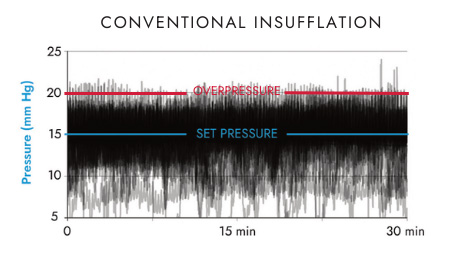
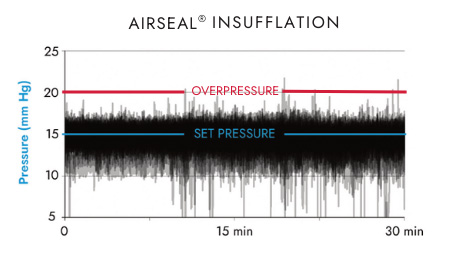
Pressure Stability:
Conventional vs. Advanced Insufflation
Experience Stability. Enable Low Pressure.
See how Advanced Insufflation can help support procedural flow, visualization, and low-pressure colorectal surgery.
* A CONMED consultant may follow up with additional information
1 Celarier S, Monziols S, Célérier B, et al. Low-pressure versus standard pressure laparoscopic colorectal surgery (PAROS trial: a phase III randomized controlled trial. Br Surg. 2021;108(8):998-1005. doi: 10.1093/bjs/znab069
2 Grieco M, et al. Low-pressure AirSeal® insufflation in transanal total mesorectal excision: impact on postoperative outcomes. Updates Surg.
3 Hamid M, Zaman S, Mostafa OES, et al. Low vs conventional intra-abdominal pressure in laparoscopic colorectal surgery: a prospective cohort study. Langenbecks Arch Surg. 2024;410:12. doi:10.1007/s00423-024-03579-3.