Smoke Plume:
The Invisible Risk in Surgery

  • Published: 4/23/2026
  • 2 min
When we think about surgery, we often focus on the benefits—restored health, improved function, and life-saving outcomes. But there’s a hidden risk that’s gaining national attention: surgical smoke plume.

What Is Surgical Plume?

Surgical plume is the smoke released when tissue is vaporized during procedures using lasers or electrosurgical devices. This smoke isn’t just unpleasant—it can contain toxic gases, cellular debris, and even viruses1,2.

Studies have shown that surgical smoke can carry carcinogenic compounds, with exposure levels comparable to inhaling cigarette smoke3. That’s why more states are passing legislation to mandate smoke evacuation systems in operating rooms3,4.


What’s the Risk?

Inhaling surgical plume can lead to serious health consequences for OR staff, including1,2,3:

Minnesota shaped image

Respiratory issues

Ohio shaped image

Infections

Virginia shaped image

Carcinogenic exposure

West Virginia shaped image

Eye and skin irritation

With nearly 90% of surgeries generating surgical smoke, the risk is widespread—and the need for protection is urgent5.

PlumeSafe® X5™ Smoke Management System: A Smarter Solution for Safer ORs

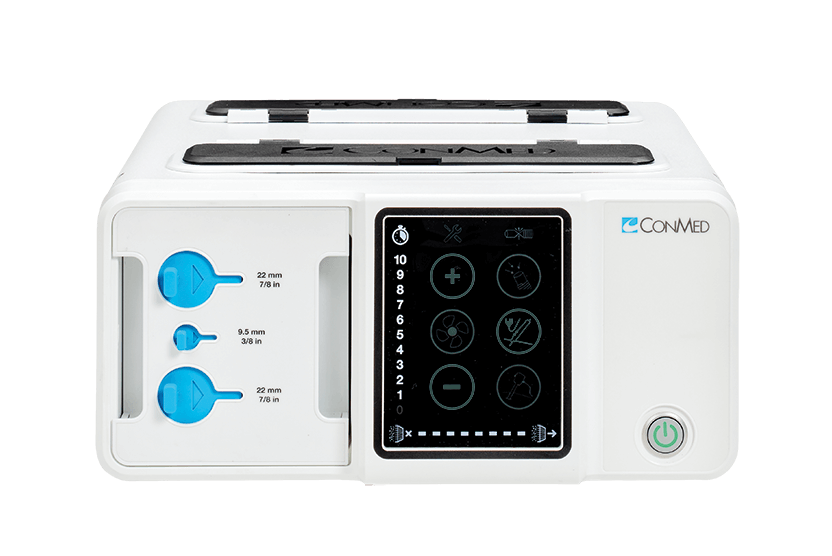
The PlumeSafe® X5™ system is a comprehensive smoke management system designed to fit seamlessly into any operating room. Its advanced 5-stage ULPA filtration captures harmful, lung-damaging particulates with a mean efficiency of 99.9997%—one of the highest on the market6.

Screen Off

What sets PX5 apart is its ability to remove volatile organic compounds (VOCs) at a rate exceeding 99%, including benzene, a known carcinogen. This is made possible by its high-performance carbon filter, which is cleaner, longer lasting, and more absorbent than standard alternatives6.

Breathe Easier in the OR

Surgical teams deserve clean air. With PlumeSafe® X5™ system, hospitals can take proactive steps to protect their staff and patients from the invisible dangers of surgical smoke.

There’s no need to wait for a mandate, you can lead the way now.

To see PlumeSafe® X5™ system in action, contact a representative to set up a demonstration.

1 Pierce JS, Lacey SE, Lippert JF, Lopez R, Franke JE. Laser‑generated air contaminants from medical laser applications: a state‑of‑the‑science review of exposure characterization, health effects, and control. J Occup Environ Hyg. 2011;8(7):447‑466.
2 Benaim, Ezer H, and Ilona Jaspers. Surgical Smoke and Its Components, Effects, and Mitigation: A Contemporary Review | Toxicological Sciences | Oxford Academic, 18 Jan. 2024, academic.oup.com/toxsci/article/198/2/157/7577863.
3 Ulmer BC. The hazards of surgical smoke. AORN J. 2008;87(4):721‑734.
4 Association of periOperative Registered Nurses. Surgical smoke. AORN J. 2008;87(4):721‑734.
5 Steege AL, Boiano JM, Sweeney MH. Secondhand smoke in the operating room? Precautionary practices lacking for surgical smoke. Am J Ind Med. 2016;59(11):1020-1031.
6 Data on File