Late 1970s - 1980s
CONMED kept its head down and built—introducing the ASPEN line of electrosurgical generators, its first proprietary surgical product.
There's a building in Utica, New York, that most people walk past without a second thought.
Nothing about it signals what it started.

In 1970, a young man walked into a small medical equipment distributorship called Mohawk Hospital Supply and decided to buy it. He wasn't a surgeon. He wasn't a scientist. He was an accountant with a restless mind and a clear-eyed belief that the medical industry could do better.
His name was Eugene Corasanti. Everyone called him Gene.
His name was Eugene Corasanti. Everyone called him Gene.

Before CONMED was a global med-tech company, before the international offices, and before the products trusted by surgeons on every continent, there was a disposable EKG electrode.
That was it. That was the beginning.
The medical industry was beginning to understand something important. Single-use products could reduce infection risk. They could protect patients in ways that reusable equipment simply couldn't guarantee. The disposable electrode was a practical answer to a real clinical problem.
That instinct, to find the gap between what healthcare providers had and what they actually needed, and then go build it, is the thread that runs from 1970 straight through to today.
It's never changed. Not once.
CONMED kept its head down and built—introducing the ASPEN line of electrosurgical generators, its first proprietary surgical product.
CONMED went public, listed on NASDAQ, and the pace of growth shifted.
CONMED acquired the Concept electrosurgical disposables business.
The 1990s were relentless. CONMED aquired Medtronic Andover Medical. Then more. Each acquisition had a logic to it.
Growing fast, thinking bigger—each deal a direct answer to the question Corasanti had been asking since 1970: what do healthcare providers need that they don't have yet?
Then came the move that changed everything.
In 1997, CONMED acquired Linvatec Corporation from Bristol-Myers Squibb. The effect was immediate and seismic.

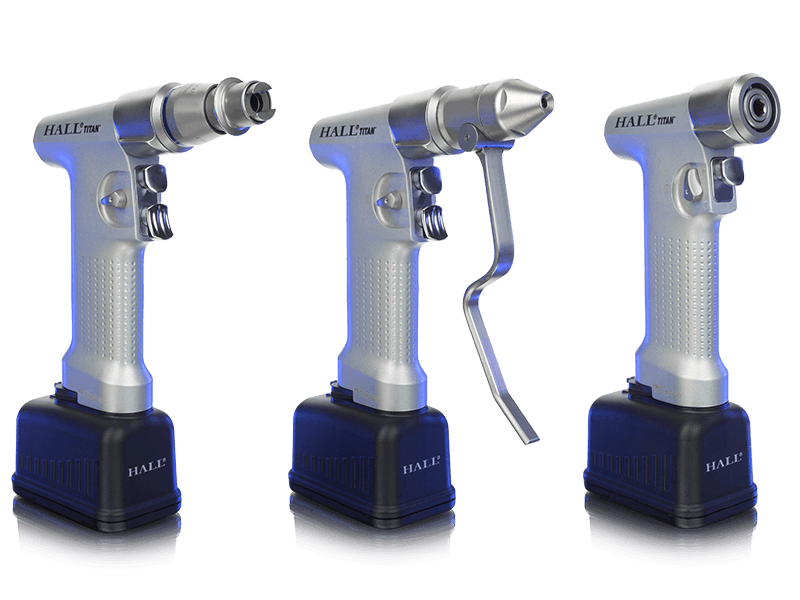
Linvatec brought with it an established global presence in arthroscopy and powered surgical instruments. It also brought Hall® Power system, a name that orthopaedic surgeons already trusted in operating rooms around the world.
Overnight, CONMED more than doubled in size.
Overnight, a company born in upstate New York had the reach to call itself genuinely global.
The 2000s brought more expansion. More listening. More building.

CONMED acquired the majority of C.R. Bard's gastroenterology and pulmonary endoscopic business, planting a serious flag in GI — one of medicine's highest-volume procedural environments.
CONMED acquired Viking Systems, bringing 3D visualisation technology into the fold and deepening the company's commitment to minimally invasive surgery.
The acquisition of Buffalo Filter cemented CONMED's position as the leader in surgical smoke management.
In2Bones became CONMED Foot and Ankle, expanding the company's reach into lower extremity care. This includes a portfolio of arthroplasty, fixation/compression devices, suture anchors, and manual instruments.
And through all of it, the company's global footprint was growing. Not because growth was the goal in itself, but because the mission had always said "around the world." Surgical teams in Europe, Australia, Latin America, Asia, the Middle East, and North America needed the same thing the surgeons in Utica needed in 1973. a partner they could trust. Instruments that worked. Technology that earned its place in the room.
Each one, a gap identified.
Each one, a problem solved.
Of all the steps CONMED has taken in 56 years, few have been as significant as these.
In 2016, CONMED acquired SurgiQuest, and with it came the AirSeal® Insufflation System.
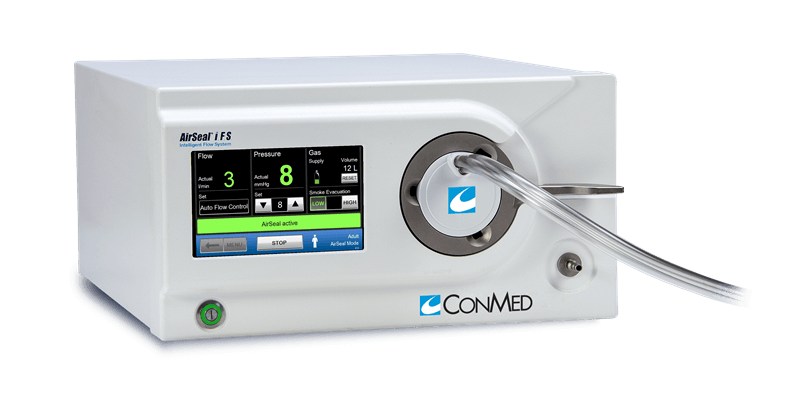
The AirSeal® insufflator was not just another product. It was a rethinking of how laparoscopic surgery worked. Surgeons who used it came back to it. Consistently. Again, and again. It became the standard by which other systems were measured.
That's not a product anymore. That's a partner.
In 2022, CONMED acquired Biorez and its proprietary BioBrace® Reinforced Bioinductive Implant.
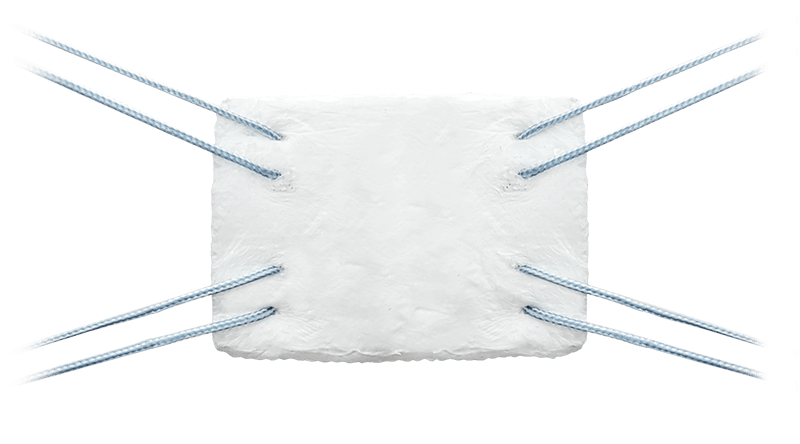
The BioBrace® implant represented something genuinely new in soft tissue repair. A technology that worked with biology rather than around it. Today BioBrace® implant is used across many unique procedures. The science behind it represents exactly the kind of thinking that has characterised CONMED for 56 years: find what medicine needs next, then go build it.
In 2022, CONMED moved its headquarters from Utica, New York to Largo, Florida.
CONMED, Largo, FL
It felt, in some ways, like the closing of a long and important chapter. Utica was where the story started. It's where the first distributor sat. Where the first electrode was manufactured. Where Corasanti asked the first version of the question that would define the company.
But Utica wasn't left behind. CONMED still manufactures there. The operations stayed. The roots stayed.
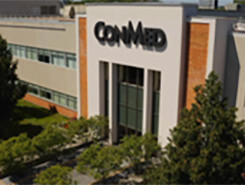
CONMED, Utica, NY
A company that started on a tiny kitchen counter now going global.
Here is what is remarkable about CONMED's story.
Not the acquisitions, Not the numbers, Not the product names.
It's that through all of it, through five decades of growth, change, and a company that remade itself again and again, the mission never shifted.
Enable healthcare providers around the world to deliver exceptional outcomes for patients.
That was the idea behind the disposable ECG electrode in 1973. The idea behind every single step CONMED took post that.
Not to be the biggest. Not to own the market. To give healthcare providers what they actually needed to do their jobs with confidence and precision, so that patients could recover, go home, and get back to their lives.




Eugene Corasanti started something in Utica in 1970 that was never really about a building or a product or a market share. It was about a question, asked quietly but persistently, year after year, decade after decade.
What do healthcare providers need that they don't have yet?
CONMED is still asking it.
This Is CONMED.